
Read books, learn indicators and key investment and trading terms.
Every beginner possesses great potential to be an expert in his or her chosen field. Here you will find books to read to evolve as a trader and investor.
Every beginner possesses great potential to be an expert in his or her chosen field. Here you will find books to read to evolve as a trader and investor.

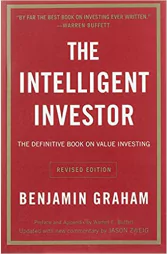
By Benjamin Graham
The book is described as the best one ever written on investment. "Chapters 8 and 20 have been the bedrock of my investing activities for more than 60 years," says Warren Buffett. He suggests that all investors reread those chapters every time the market has been especially strong or weak.
Order
By Joel Greenblatt
According to Warren Buffet, investing seems to be simple, but it is not easy. The main focus of the book is the simplicity of investment. The author has average annualised returns of about 40% for over 20 years. He explains investment in plain terms and using the maths of the 6th grade.
Order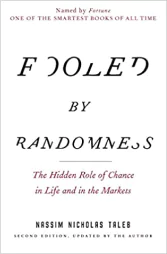
By Joel Greenblatt
This book changes the perception of the surrounding. After you read it, everything will never be the same again. The author offers to look at the world probabilistically. This book investigates opacity, luck, uncertainty, probability, human error, risk, and decision-making in a world we don't understand.
Order
By Howard Marks
Warren Buffet refers to this book as rare, helpful, and valuable. More than teaching you the keys to successful investment, it will teach you about critical thinking by explaining such concepts as "second-level thinking," the price/value relationship, patient opportunism, and defensive investing. The author provides valuable lessons on critical thinking, risk assessment, and investment strategy lessons.
Order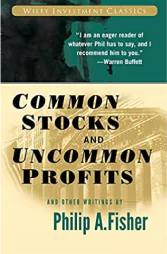
By Philip A. Fisher
"I sought out Phil Fisher after reading his Common Stocks and Uncommon Profits...A thorough understanding of the business, obtained using Phil's techniques, enables one to make intelligent investment commitments." ―Warren Buffet. The book explains stocks and teaches a critical and balanced approach to investment decisions.
OrderExplore the top indicators for traders and investors. The Eureka Mondo experts explain them in simple terms and illustrate them with examples.
RSI stands for Relative Strength Index. This oscillator evaluates overbought and oversold areas. It calculates the value considering the cumulative strength and weakness of the price specified in the input price over the period specified in the input length. For that number of bars, RSI accumulates the points gained on bars with higher closes and the points lost on bars with lower closes. These two sums are indexed, with the index plotted on the chart.
The practical value of the RSI indicator is additional confirmation of price movement. It is a powerful assessment tool.
A rising RSI indicates a rising price movement. However, if there is an increasing price without a rising RSI, such a condition means a false breakout.
ADX stands for Average Directional Index. It estimates the current trend's strength and the scale of movement. This indicator works with bullish and bearish trends.
The practical value of the ADX indicator is that it provides a clear indication of price movement trends.
If the value of the ADX indicator is lower than 20, it means that the market is not in a trend. A move above 20 indicates the trend beginning. If the indicator falls after reaching 40 points, this means the reversal price movement trend.
The Moving Averages indicator is one of the oldest and most informative indicators traders, and investors use. It uses a mean of prices calculated over a specified amount of time that adds the closing price of a security and divides the sum by the set number of periods. The indicator smoothly provides a reliable signal. The Moving Averages indicator can be combined with MACD and RSI for higher precision and clarity.
The practical value of the Moving Averages indicator is an opportunity to easily calculate different prices - open, close, high, and low. It indicates clear signals to buy and sell assets.
A 25-period indicator uses the last 25 closes of each price bar, adds them together, and divides them by 25 to determine the average price over that time frame. That average is then plotted across the chart using the last 25 periods from each point in time.
Bollinger Band indicator draws a deviation channel using the moving average. It is used to estimate the volatility of a currency pair. The bands adjust themselves to changing market conditions.
The practical value of the Bollinger Band indicator is in its trade confirmation, in addition to studying the price action and volume during the timeframe under assessment. Investors also use them as overbought and oversold levels for entering trades or simply avoiding opening a new position.
When the market features excessive volatility, the bands get wider, while in less volatile sessions, the bands constrict.
The Money Flow Index is a technical indicator that generates overbought or oversold signals using prices and volume data. It indicates the validity of the trend. It is calculated the following way: take an average of the high, low, and close prices and then multiply that by the volume in the first step. This number is then compared to the result for the previous bar.
The practical value of the MFI indicator is that it provides a different perspective from price or volume alone. It shows dramatic oscillations and is used for identifying overbought and oversold conditions.
The practical value of the MFI indicator is that it provides a different perspective from price or volume alone. It shows dramatic oscillations and is used for identifying overbought and oversold conditions.